
News
The McGill College Avenue: Transformation
Jean Giguère
Author :
WikiResidence
Source :
24/08/25
The City of Montreal has undertaken an ambitious redevelopment project for McGill College Avenue, aiming to transform this iconic downtown thoroughfare into a true public square.
This initiative provides for a significant reduction in car traffic in favor of pedestrians, cyclists, and the development of welcoming green spaces.
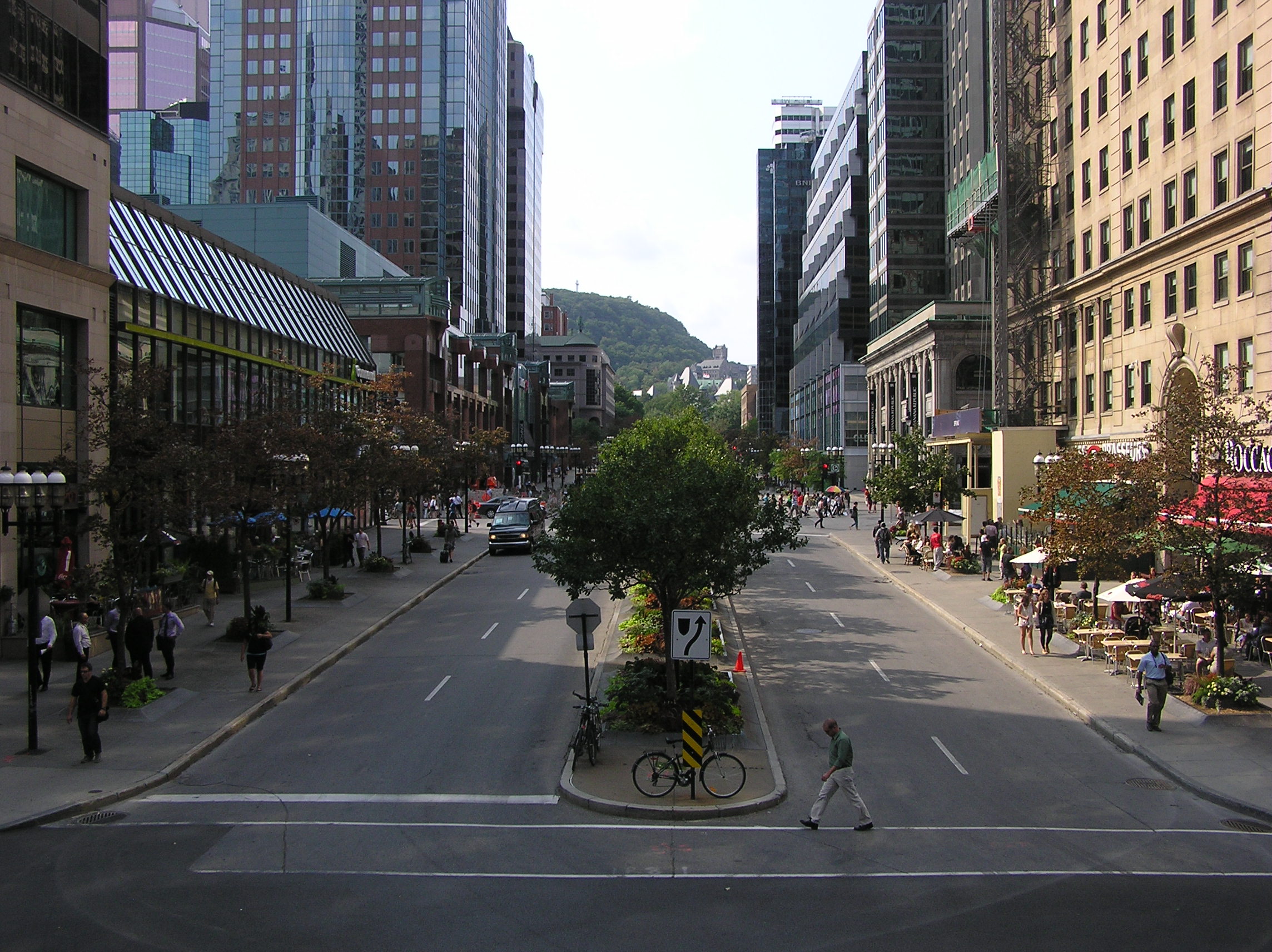
McGill College Avenue, a key corridor connecting Mount Royal to downtown Montreal, is undergoing a major transformation.
The project announced by the City aims to reinvent this space by significantly reducing the presence of cars to create a new public square at the heart of urban activity.
From 2026, work will begin with the refurbishment of underground infrastructure and will continue with landscaping.
Eventually, this axis will be transformed into an impressive pedestrian public square over its entire surface, between Cathcart and Sherbrooke West streets.
The new layout will transform the pedestrian experience, who will be transported to the heart of nature in the middle of downtown.
Among the planned interventions are the planting of nearly 200 trees and several perennials and shrubs.
The development of several rest and socialization areas will be an opportunity to add urban furniture such as benches and tables.
The presence of a large fireplace to warm up pedestrians in cold weather and misters for the summer period will contribute to enhancing the user experience throughout the year. Project location
Place Oscar Peterson
Will be created a central square in memory of Oscar Peterson
The memory and exceptional contribution of Montreal jazzman Oscar Peterson will be honored with the designation of a square bearing his name.
Located in the central area of McGill College Avenue, between Sainte-Catherine West Street and De Maisonneuve West Boulevard, Place Oscar-Peterson will be enhanced with a figurative sculptural work, a mural, and unique lighting.
This tribute testifies to the recognition and cultural and social importance that this piano virtuoso still has today, nearly 15 years after his death.
Born in 1924 in the southwest of Montreal, Oscar Peterson contributed to the influence of Montreal as a cultural metropolis while also being a major player in the fight against racial inequality.
A work of art by Valérie Blass, a Montreal-born artist and renowned sculptor in the visual arts community, will also be included in the project.
The work will offer singular and unique experiences to the public.
This bold initiative is part of a vision for development where pedestrians and green spaces take a prominent place.
A human-centered redevelopment
The redevelopment concept for McGill College Avenue focuses on creating a more pleasant and safe environment for pedestrians and cyclists.
Preliminary plans suggest:
A significant reduction in the number of car lanes.
The development of large pedestrian areas with urban furniture inviting people to relax and socialize.
The integration of green spaces, such as trees, gardens, and potentially fountains, to create cool havens and improve the avenue's aesthetics.
Secure cycling infrastructure to encourage active mobility.
This project is inspired by similar successes in Montreal and other cities around the world, where the pedestrianization or semi-pedestrianization of major arteries has revitalized entire neighborhoods.
Similar urban redevelopment projects in Montreal
Montreal has already undertaken several projects aimed at improving its public spaces and promoting active mobility. Notable initiatives include:
The summer (and soon to be permanent) pedestrianization of Sainte-Catherine Street East in the Village: As previously discussed, this transformation has boosted the neighborhood and attracted increased foot traffic. The investment of $200 million for a permanent pedestrianization project demonstrates the City's commitment to this type of project.
The redevelopment of Wellington Street in Verdun: The transformation of this commercial street into a friendly thoroughfare with wider sidewalks, urban furniture, and special events has led to a significant increase in foot traffic and a renewed interest in local businesses. Studies have shown a pedestrian traffic increase of up to 86% during animated periods.
The revitalization of the Quartier des Spectacles: Although on a larger scale, this project demonstrated how investments in public spaces and cultural infrastructure can transform a sector and generate significant economic benefits.
These examples highlight the potential benefits of the McGill College Avenue redevelopment.
Economic impacts, financial investments, and other relevant information
While the precise financial details for the McGill College Avenue project were not specified in the article, investments in such urban projects are generally substantial and aim to generate multiple benefits:
Economic revitalization: The creation of an attractive public square can stimulate commercial activity by increasing foot traffic and encouraging spending at nearby businesses, restaurants, and hotels. Studies on other similar projects have shown an increase in revenue for local merchants.
Tourist attraction: A redeveloped McGill College Avenue could become a tourist attraction in its own right, contributing to Montreal's reputation as a world-class destination.
Real estate value: Improving the quality of life and attractiveness of a sector can have a positive impact on the value of surrounding properties.
Sustainable mobility: By promoting walking and cycling, the project is in line with the City's goals of reducing greenhouse gas emissions and promoting active transportation modes.
Quality of life: The creation of friendly and green public spaces contributes to the well-being of citizens and improves the downtown living environment.
The McGill College Avenue project represents an ambitious vision for the heart of Montreal.
By drawing on past successes and focusing on a design that meets the needs of pedestrians and cyclists, the City hopes to transform this thoroughfare into a truly dynamic and attractive public square, generating significant economic, social, and environmental benefits for the city.